Roll With It or Rewrite It: A DM's Real Talk on Dice vs. Story
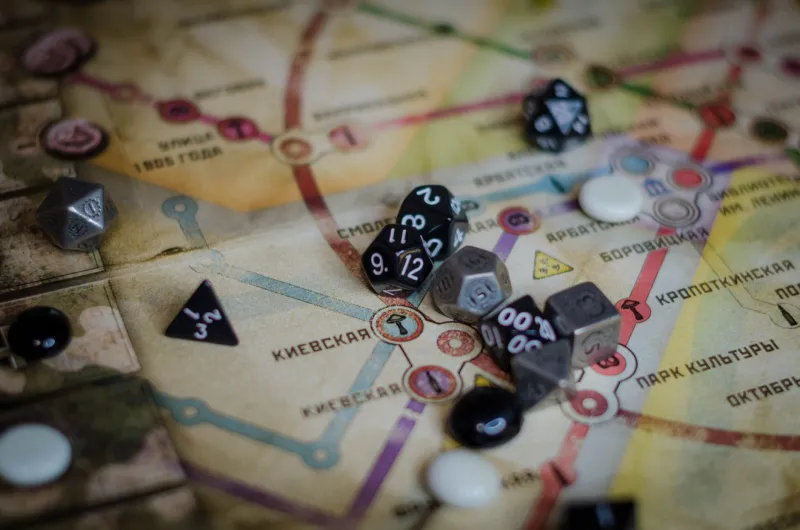
There's a moment every DM knows in their bones. You've spent three sessions building toward a dramatic confrontation. The villain is monologuing. The tension is perfect. Then a player crits on an attack of opportunity and the whole thing collapses into a pile of loot and shrugs.
Do you honor it? Do you fudge it? Do you quietly slide the HP counter back up and pray nobody noticed?
The tension between randomness and narrative is one of the oldest debates in tabletop gaming, and there's no single right answer. But there are smarter ways to think through the decision — and a few principles that can save you from the worst outcomes on either side.
Why Randomness Matters in the First Place
Before we talk about when to override the dice, it's worth remembering why they're there. Randomness creates genuine stakes. When players know you'll never let a key NPC die, never let the heist fail, never let the dragon actually breathe fire at the wrong moment — they stop believing in the world. The dice are a credibility mechanism. They're your table's shared agreement that outcomes aren't predetermined.
Systems like Dungeon Crawl Classics lean hard into this, practically celebrating character death as part of the experience. Old-school D&D players will tell you that a campaign where nothing is really at risk isn't really a campaign — it's collaborative fan fiction. That's not an insult, exactly, but it's a different game.
So when you override a roll, you're spending some of that credibility. Spend it wisely.
When the Dice Are Just Plain Right
Sometimes the random outcome is better than anything you planned. A player botches a persuasion check with a city guard and accidentally starts a subplot that runs for four sessions. A villain rolls a natural 1 on their big dramatic attack and the table erupts. These are the moments people retell for years.
The dice have no ego. They don't care about your outline. And sometimes that's exactly the creative pressure you need.
A good rule of thumb: if the random outcome is interesting, let it stand. Interesting doesn't mean convenient. It doesn't mean painless. It means it opens a door, creates a question, or changes the texture of the story in a way that gets everyone leaning forward.
The paladin failing their death save at a dramatically inconvenient moment? Interesting. The main antagonist getting one-shotted before they deliver the exposition you needed? That one's trickier.
The Three Questions to Ask Before You Fudge
Let's be honest — most experienced DMs fudge occasionally. The question isn't whether it's ever acceptable. The question is whether you're doing it for the right reasons. Before you quietly adjust a number, ask yourself:
1. Am I protecting the story, or protecting my prep work? These are not the same thing. If an unexpected outcome genuinely breaks the narrative in a way that can't be recovered — say, a key information-carrier dies before the party learns a plot-critical secret — that's a story problem worth addressing. But if you're fudging because your three-page villain backstory is about to get skipped? That's ego. Let it go.
2. Would the players enjoy the random outcome more than my intended one? Ask this honestly. Players often have more fun with chaos than DMs expect. The mess is frequently the memory. If the answer is yes, or even maybe, trust the dice.
3. Is this a one-time adjustment or the beginning of a habit? Fudging once to preserve a genuinely important story beat is a tool. Fudging every time an outcome makes you uncomfortable is a crutch. If you've quietly adjusted three rolls in a single session, that's a pattern worth examining.
Systems That Build the Decision In
Some games handle this tension structurally, which can take a lot of pressure off the DM. Fate Core's fate points let players directly spend narrative currency to reframe outcomes — the table collectively decides when story trumps randomness. Ironsworn uses a move-based oracle system where results are always interpreted through the fiction, making every roll a collaborative storytelling beat rather than a binary pass/fail.
Even 5e has built-in pressure valves. Inspiration, Legendary Resistances, and the Dungeon Master's Guide's optional Lingering Injuries rules all give you ways to modulate outcomes without hiding them from the table. Using these tools openly is almost always better than secret fudging — players can see the mechanisms at work and trust that the world is operating by consistent rules, even flexible ones.
The Transparent Middle Ground
Here's an approach that doesn't get enough credit: just tell the table what you're doing.
Not every time, and not in a way that breaks immersion. But occasionally, when a roll produces an outcome that would require genuinely awkward narrative surgery, you can simply say: "Okay, technically that kills him — but I want to give this moment a little more room. Let's say he's at one hit point and barely standing. Is everyone cool with that?"
Most tables will say yes. And more importantly, you've preserved trust. The players know you're not secretly running a railroad. They've consented to a small narrative adjustment. The social contract stays intact.
This works especially well in games with a strong collaborative storytelling culture — Blades in the Dark, for instance, practically encourages this kind of open negotiation as part of its DNA.
The Long Game
Ultimately, the dice-versus-narrative tension isn't something you solve once and move on from. It's an ongoing calibration, and the right balance shifts depending on your group, your system, and where you are in the campaign.
Early sessions often benefit from honoring random outcomes almost universally — it establishes that the world has teeth. Mid-campaign, when players are deeply invested in characters and story threads, a lighter touch on narrative management can pay dividends. Late in a campaign, when you're building toward resolution, protecting a few key beats might be worth the occasional quiet adjustment.
The dice don't lie. But they also don't know your story. Your job is to hold both of those truths at once — and make the call with confidence, whatever you decide.