Nobody Sits in the Back Row: Real Strategies for Sharing the Spotlight Without Faking It
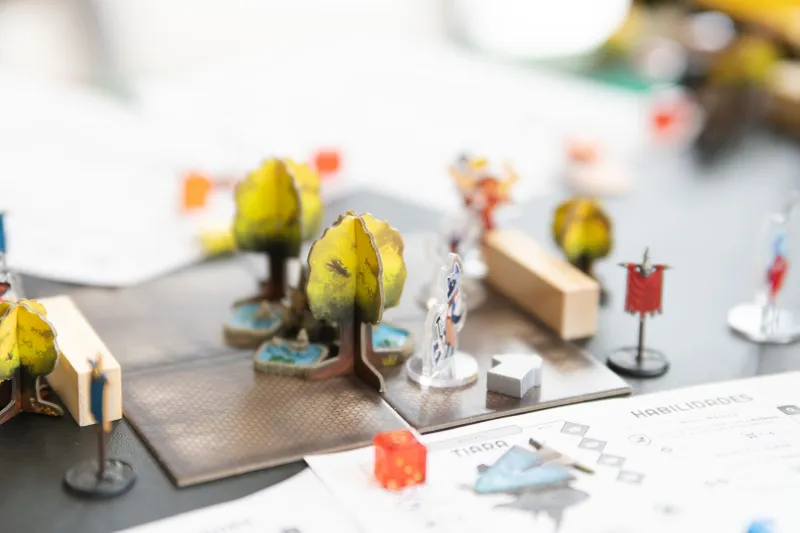
There's a moment most DMs know intimately. You're mid-session, the rogue is three-deep into an elaborate heist monologue, and somewhere across the table a paladin's player is quietly reorganizing their dice bag for the fourth time. They're not bored, exactly. They're waiting. And waiting. And the longer they wait, the more that wait starts to feel like a verdict on their character's importance.
Spotlight management is one of those topics that sounds like a soft skill until you realize it's quietly responsible for half the campaign implosions in the hobby. Get it wrong and you don't just lose a session — you lose a player's investment in the whole story. But here's where a lot of DMs go sideways: they treat the problem like a scheduling issue. They start mentally tracking who "had a moment" last week and engineering one for whoever's due. The result is what you might call contrived heroism — scenes where a character inexplicably saves the day not because the fiction demanded it, but because the DM felt guilty.
Players notice. They always notice.
The Real Problem Isn't Airtime — It's Investment
Before you start tinkering with encounter design, it's worth reframing what spotlight actually means. It's not screen time. It's not the number of times a character speaks or rolls dice. Spotlight is the feeling that your choices are shaping something real.
A character can go an entire session without a dramatic solo moment and still feel completely central to the story — as long as their decisions are visibly mattering. Conversely, a character can roll three crits and deliver a killer monologue and still walk away feeling hollow if none of it connected to anything they actually cared about.
This distinction is everything. When you chase airtime equity, you're solving the wrong problem. When you chase investment equity, you're in the right neighborhood.
Backstory Isn't a Cutscene Trigger
The most common spotlight tool in a DM's kit is the backstory callback — that moment when a villain turns out to have ties to a character's tragic past, or a mysterious NPC recognizes someone's family crest. Done well, these land beautifully. Done lazily, they feel like the DM is pulling a lever.
The difference is whether the callback requires the player to make a meaningful choice. A villain who threatens a character's sister isn't spotlight — it's a cutscene. A villain who offers that character something that conflicts with the party's goals? Now you've got something. Now the player has to decide, and that decision ripples outward.
This is where actual play shows like Critical Role and Dimension 20 have quietly modeled something useful. Their best spotlight moments rarely come from DM-engineered backstory payoffs. They come from players whose characters have such clearly defined wants and fears that the fiction keeps naturally colliding with them. The DM's job isn't to manufacture those collisions — it's to leave enough space for them to happen.
When Goals Conflict (and Why That's a Gift)
Here's an uncomfortable truth: a party where everyone agrees on everything is a party where most players are suppressing their character's actual motivations. Some tension between characters isn't a problem to be managed — it's one of the most reliable spotlight generators in the game.
When the wizard wants to negotiate and the barbarian wants to burn the building down, both players are suddenly central to the scene. The DM doesn't have to do anything except let the fiction breathe. The conflict itself distributes the spotlight.
The trick is making sure that conflict stays productive rather than spilling into actual table drama. A few things that help:
- Establish competing goals at Session Zero, not retroactively. When players build characters with conflicting loyalties or philosophies from the start, tension feels organic rather than adversarial.
- Let NPCs respond to the disagreement. If the party can't agree, have the world react to their indecision. A faction loses patience. A window closes. This makes the conflict feel consequential without the DM picking a winner.
- Separate the characters' conflict from the players' investment. Two characters can hate each other's methods while both players are deeply engaged. Make sure your table culture supports that distinction.
The Loud Player Problem
Let's talk about the thing nobody wants to say out loud: some players are just louder. More talkative, more assertive, quicker to jump in. They're not villains — they're often the most enthusiastic people at the table. But their energy can functionally crowd out quieter players who are equally invested and just less comfortable grabbing the mic.
Mechanical solutions exist. Some DMs use literal tokens — each player gets a set number of "action chips" per session and has to spend one to take a significant scene action. This sounds clunky on paper and genuinely works in practice, especially for new groups still figuring out their social rhythm.
But the more sustainable fix is environmental. Design scenes with multiple simultaneous pressure points. A negotiation happening in one corner of the room while a heist is unfolding in another doesn't just create tactical complexity — it physically separates the table's energy and forces different players into different spotlights. Loud players can't dominate a scene they're not in.
Also: talk to your players outside the game. A five-minute check-in between sessions — "Hey, how's your character feeling about where things are headed?" — does more for spotlight equity than any in-session engineering. Players who feel heard tend to advocate for their own moments more confidently.
Build Toward the Characters, Not Around Them
The deepest shift a DM can make is moving from reactive spotlight management to proactive world-building. Instead of watching for who's been quiet and inventing a moment for them, build a world where each character's specific skills, connections, and goals are structurally necessary to the story you're telling.
If your campaign involves navigating a city's criminal underworld, the rogue isn't getting spotlight because it's their turn — they're getting it because the fiction requires what they know. If the next arc involves a divine crisis, the cleric isn't being handed a moment — they're being dropped into the exact terrain where their character's questions have always mattered most.
This is the difference between a DM managing spotlight and a DM designing a story where spotlight distributes itself. One requires constant vigilance. The other just requires knowing your players well enough to build a world that genuinely needs all of them.
Nobody wants to feel like they're being managed. They want to feel like they belong at the center of something. Build that, and you'll never have to fake it.