When the Dice Become the Villain: Protecting Your Story Without Killing the Stakes
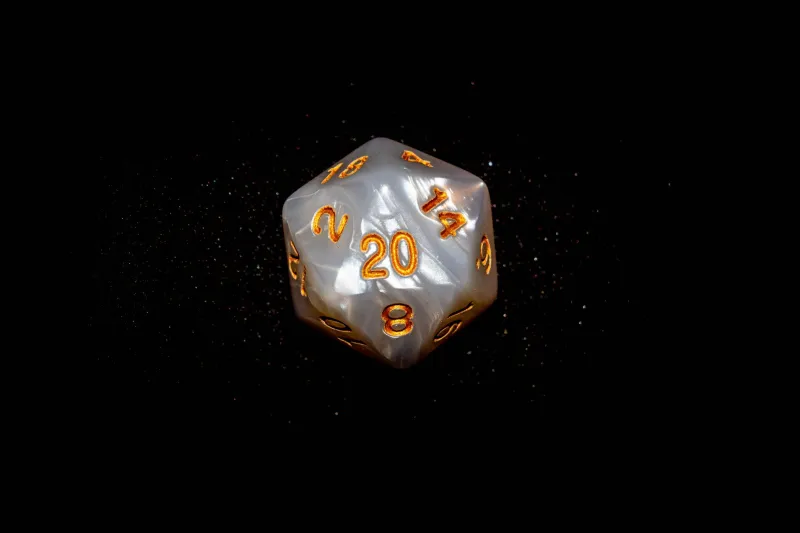
You've spent three sessions building to this moment. The party finally confronts the corrupt senator who's been pulling strings from behind a velvet curtain. The rogue — who has a personal vendetta, a heartbreaking backstory, and a player who's been incredibly patient — steps forward to deliver the speech that ties everything together. She rolls Persuasion.
Nat 1.
The senator laughs. The guards rush in. The emotional crescendo you spent weeks constructing collapses into a chaotic brawl, and afterward, everyone at the table feels a little hollow.
This is the tyranny of the dice — and if you've been running games for more than a few months, you've lived it.
The Tension at the Heart of Every TTRPG
Here's the honest truth: randomness is also the magic. The dice are why a session can surprise you even when you wrote the adventure. They're why your players lean forward when someone picks up that d20. Strip out the randomness entirely and you're not playing a game anymore — you're collaborative improv theater with extra steps.
But randomness is a blunt instrument. It doesn't know that you've been building toward a particular beat for six sessions. It doesn't care that one player finally opened up about their character's trauma last week. The dice will cheerfully torch your most carefully laid narrative groundwork and not lose a minute of sleep over it.
The skill isn't eliminating that tension. It's learning to work with it — and knowing the handful of moments when you can quietly override it without undermining everything that makes rolling feel meaningful.
Reframe What the Roll Is Actually Deciding
One of the most underused tools in a DM's kit is controlling what a roll determines before the dice hit the table. The classic mistake is letting rolls become binary — success means the story goes this way, failure means it collapses. That's not great game design, and it's not great storytelling either.
Instead, think of rolls as deciding how something happens, not whether it happens. In that confrontation with the senator, the rogue failing her Persuasion check doesn't have to mean she's laughed out of the room. Maybe she doesn't convince him — but she rattles him. Maybe he agrees to a meeting later, under his terms, which opens a different and potentially more interesting thread. The failure becomes a complication, not a dead end.
This reframing works especially well for social encounters, investigation sequences, and any moment where the story needs to keep moving. Combat is a little different — there, the stakes are usually clearer and a failure is more naturally a failure — but even there, a missed swing doesn't have to be narratively inert.
The Art of the Difficulty Adjustment
Another technique that doesn't get talked about enough: adjusting DCs on the fly based on context you understand better than your rulebook does.
The Dungeon Master's Guide will give you a chart. DC 10 is easy, DC 20 is hard, DC 25 is very hard. What those numbers can't account for is dramatic context. If a player has spent three sessions establishing that their character is the world's foremost expert on arcane contracts, and they roll to identify a magical clause that's central to your plot, maybe that DC quietly drops a few points in your head before you announce the result. Not because you're cheating — because you're acknowledging that the fiction your players have built should mean something.
This isn't the same as just handing players what they want. The roll still happens. Failure is still possible. But you're calibrating the difficulty to the story you're all telling together, which is exactly what the game expects you to do.
The Fudge: When, Why, and How to Not Feel Gross About It
Okay, let's talk about the thing every DM does and half of them feel weird admitting: sometimes you fudge the roll.
You roll behind your screen, you see a natural 20 that would kill the party's favorite NPC in a meaningless skirmish, and you quietly decide it's a 14. Or you see a 1 that would cause a character's death at a moment that feels narratively cheap, and you adjust. It happens. It's been happening since Gary Gygax was running games out of his basement.
The question isn't really whether to fudge — it's when fudging serves the game and when it undermines it. A few rough guidelines:
Fudge to prevent cheap, meaningless outcomes. A random crit that kills a character in session two before they've had a single meaningful moment is different from a crit that ends a character's arc at its peak. The first one might be worth softening. The second one might be exactly the story beat your table needs.
Don't fudge to protect your own plans. This is the line where DM fudging becomes DM railroading. If the dice are telling you the players found a way to bypass your dungeon, or they talked their way out of the fight you designed, that's the game working. Fudging to keep your prep intact isn't protecting the story — it's protecting your ego.
Be honest with yourself about your motives. The gut check is simple: are you adjusting this outcome because it makes the players' experience better, or because it makes your job easier? Those aren't always the same thing.
Building a Table Culture That Handles Bad Rolls Gracefully
The best long-term solution isn't a toolkit of DM tricks — it's building a table culture where a devastating roll becomes a story opportunity rather than a session-ender.
That starts with how you respond in the moment. When a critical failure lands at the worst possible time, your energy at the table sets the tone. If you wince and go quiet, players will feel like something went wrong. If you lean in, get curious, and ask "okay, what does this mean for the story" — players will follow that lead.
It also helps to explicitly name this as a value at your table. Some groups do a brief check-in at the end of sessions: what moments felt great, what felt frustrating. When players know that rough dice outcomes are part of the conversation rather than something to just absorb, they're more likely to see them as interesting rather than demoralizing.
The Dice Are a Feature, Not a Bug
At the end of the day, the dice aren't your enemy — they're your most unpredictable co-author. They'll occasionally blow up your favorite plot thread, strand your narrative arc, or hand a critical moment to entirely the wrong character.
And sometimes? That's the best thing that ever happened to your campaign.
The goal isn't to tame the dice into submission. It's to stay flexible enough that when they surprise you, you can catch that surprise and turn it into something your players will still be talking about years later. The tyranny is real — but so is the magic. Learn to tell the difference, and the polyhedral gods will mostly be on your side.