The Lore Trap: How Your World Bible Might Be Quietly Killing Your Campaign
Let's talk about the binder.
You know the one. Maybe it's a Google Doc that's ballooned to sixty-seven pages. Maybe it's a Notion workspace with nested databases tracking noble bloodlines back four generations. Maybe it's a hand-drawn map with annotations in three different ink colors, each representing a different era of your world's history.
You built it with love. You built it with intention. And then your players showed up to session one, immediately ignored the ancient prophecy you'd seeded into the opening monologue, and decided they were going to start a fish-smuggling operation out of the docks district.
Congratulations. You've fallen into the Lore Trap.
The Problem Isn't the Prep — It's What You're Protecting
Worldbuilding isn't inherently bad. Nobody's telling you to run your campaign off a cocktail napkin sketch (though honestly, some of the best one-shots have started exactly that way). The issue isn't that you built something elaborate. The issue is what happens the moment your players interact with it.
When a DM has invested months into a detailed world history, something psychological shifts. That lore stops being a tool and starts being a monument. You stop asking "how does this serve the story?" and start asking "how do I protect what I've already built?" That's a subtle but catastrophic change in priorities.
Players are chaos agents by nature. Not out of malice — they're just doing exactly what they're supposed to do. They're making choices, following their characters' instincts, and pushing on every door they find. A world that can't absorb that pressure isn't a living world. It's a museum. And nobody wants to play in a museum.
The Iceberg Principle (And Why Most DMs Ignore It)
Here's a concept worth tattooing somewhere useful: the iceberg principle. The idea is that roughly ninety percent of your worldbuilding should exist beneath the surface — informing your decisions, flavoring your descriptions, shaping NPC motivations — while only about ten percent ever makes it to the table in a form players will actually encounter.
Most DMs know this in theory. Almost none of them practice it.
The temptation is to make players aware of all the work you've done. You want them to appreciate the three-century schism between the Church of Solara and the Ember Covenant. You want them to care about the disputed succession crisis in the northern provinces. And so you find ways to push that information at them — exposition-heavy NPCs, handouts full of historical context, plot hooks that require understanding backstory to even make sense.
Players don't absorb information they didn't ask for. They just don't. If your lore isn't answering a question they're already curious about, it's background noise.
Essential Lore vs. Expendable Detail
So how do you figure out what actually matters? Run everything through this filter: does this lore create a decision, a conflict, or a consequence that affects the players directly?
If the answer is yes, it's essential. If the answer is "well, it might come up eventually" or "it's important for the world to feel real," it's expendable — at least for now.
Essential lore looks like this: the thieves' guild controls the city guard, so bribing a watchman has unexpected consequences. The goddess of healing has gone silent for two decades, so clerics have been improvising and some of them have gone in very dark directions. The last war ended in a treaty everyone secretly resents, so the peace is always one bad harvest away from collapsing.
Expendable detail looks like this: the complete dynastic history of a kingdom your players will probably never visit. A fully fleshed-out magic system for a school of spellcasting nobody in the party uses. Seventeen named members of a merchant consortium that exists primarily to explain how trade routes work.
None of that second list is bad, exactly. It might even be fun to write. But it shouldn't be load-bearing in your campaign, and you absolutely shouldn't be upset when players never engage with it.
Building a World That Bends Without Breaking
The best worldbuilding frameworks aren't rigid architectures — they're more like improvisational jazz. You have a key, you have a tempo, you have a general melodic idea. But when your players introduce something unexpected, you can work with it instead of fighting it.
A few practical approaches that actually hold up at the table:
Start with factions, not history. Players interact with people and organizations, not timelines. Define three to five factions with competing goals, clear values, and flexible membership. History can emerge from the conflicts between them as the campaign unfolds, rather than arriving pre-packaged.
Leave deliberate blank spaces. Resist the urge to name every city, every noble, every deity. Blank spaces on your map aren't failures of imagination — they're invitations. When a player asks "what's in the mountains to the east?", that's your cue to build something together, not to consult your notes.
Make lore responsive, not fixed. When players do something that contradicts your established history, ask yourself: is this actually a problem, or is it an interesting development? Nine times out of ten, the thing they broke is more interesting broken than it was intact. Lean into it.
Summarize, don't document. If you can't explain a piece of lore in two or three sentences, it probably isn't ready for the table yet. The act of summarizing forces you to identify what actually matters about it.
When Players Demolish Something You Loved
It's going to happen. Your players are going to assassinate the NPC you spent weeks developing. They're going to side with the faction you designed as antagonists. They're going to find a creative loophole that completely bypasses the political intrigue you plotted for three sessions.
The instinct is to feel betrayed. Resist it.
Instead, try treating player disruption as collaborative authorship. They're not ignoring your world — they're writing in it. The city they burned down becomes a ruin with a story. The alliance they shattered creates new enemies and unexpected allies. The god they accidentally offended has opinions about that.
A world that can't be changed by the people living in it isn't a world worth exploring. Your lore bible is a starting point, not a contract.
The Real Point of Worldbuilding
At the end of the day, every piece of lore you create exists for one reason: to make the moments at your table feel more real, more surprising, and more meaningful. Not to showcase your creative output. Not to reward players who pay close attention to your exposition. Not to preserve the vision you had before anyone sat down to play.
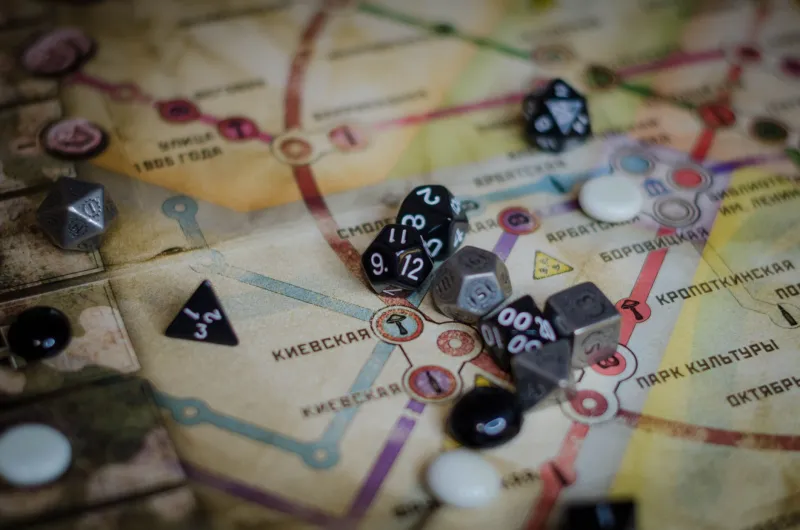
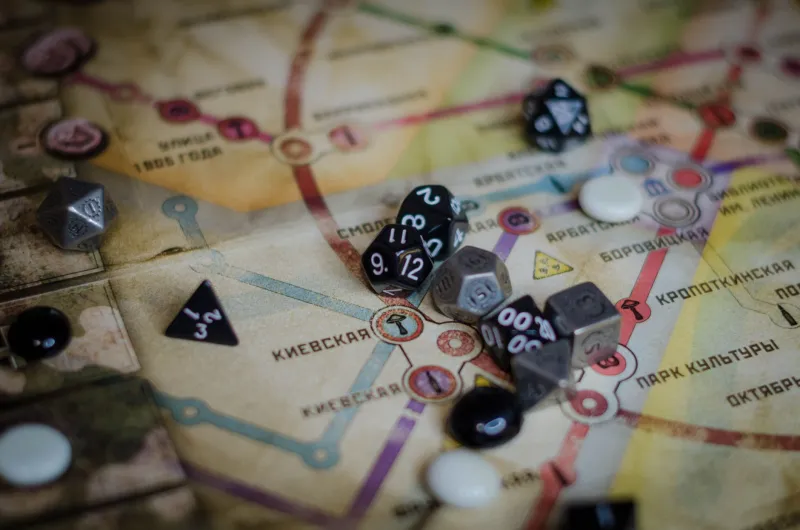
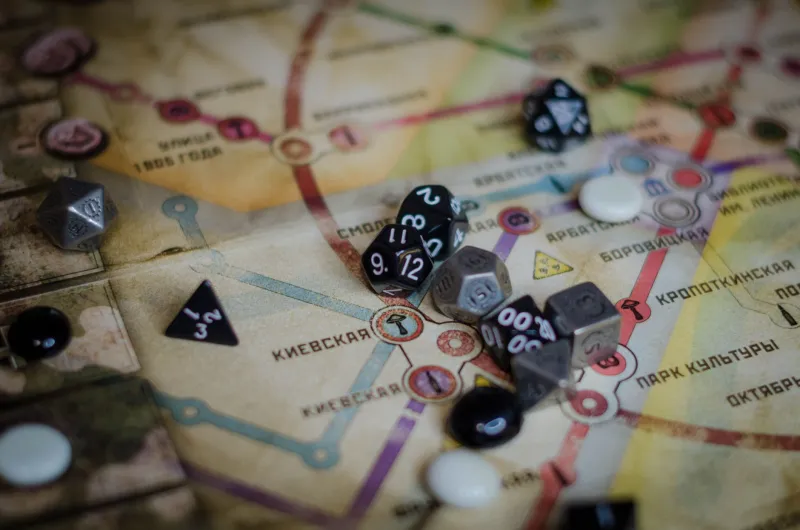
The parchment is for notes. The polyhedral is for playing. Keep those priorities straight, and your world will survive contact with your players — and be better for it.