Crunch the Numbers: What Probability Actually Tells Us About D&D Combat

Let's be honest — most of us didn't pick up a set of polyhedral dice because we love statistics. We picked them up because we wanted to stab a dragon with a sword made of lightning. But here's the thing: the math was always there, quietly shaping every encounter, every near-death experience, every miraculous last-second save. Once you pull back the curtain on D&D's probability engine, you start seeing the game differently. Not less magically — just more clearly.
This isn't about turning your Wednesday night session into a spreadsheet exercise. It's about understanding the invisible architecture of the game so you can make smarter choices when the stakes are high.
The Baseline: What a d20 Is Actually Telling You
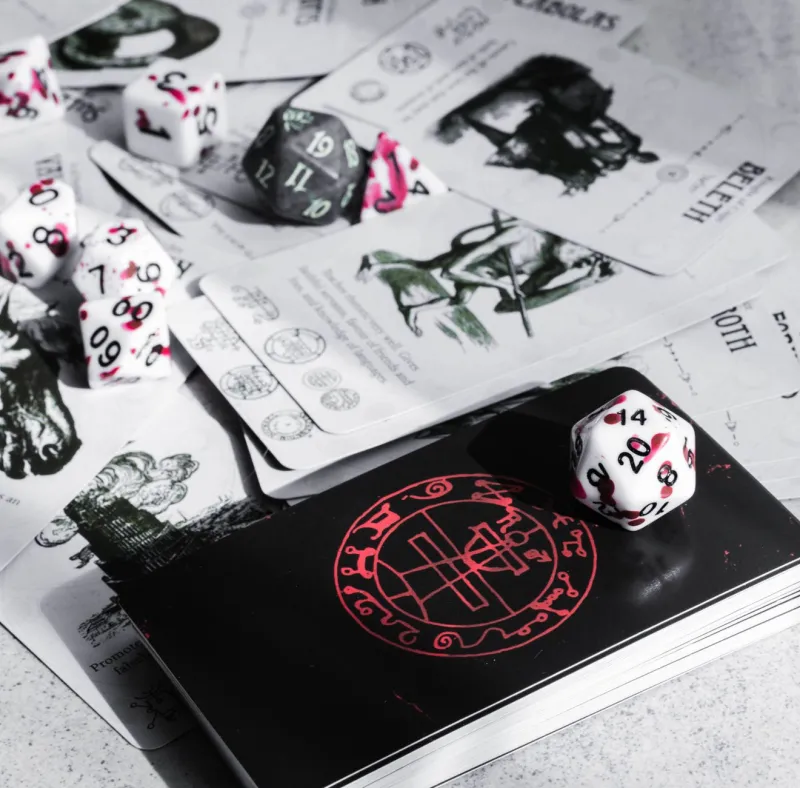
A single d20 roll is about as fair a randomizer as you can get — each number from 1 to 20 has an equal 5% chance of appearing. That sounds simple, but its implications ripple through every combat decision you make. When a fighter with a +7 to hit swings at an enemy with an AC of 15, they need an 8 or higher. That's a 65% hit rate. Solid, right? Sure. But it also means they miss more than one in three times — a fact that tends to get lost in the excitement of rolling.
The real insight here is that modifiers matter enormously at the margins. The difference between a +5 and a +7 attack bonus isn't just two numbers — it shifts your hit probability by 10 percentage points. Over the course of a four-round combat, those missed swings compound into real consequences.
Advantage: More Powerful Than It Feels
When your rogue sets up a Sneak Attack from hiding or your paladin benefits from a Bless spell, you're not just rolling twice and picking the higher number — you're fundamentally reshaping the probability curve. The average result of a straight d20 roll is 10.5. Roll with advantage, and that average climbs to about 13.8. That's nearly a +3.3 bonus in expected value terms.
But the real kicker is what advantage does to critical hits. A natural 20 on a single roll is a 5% chance. With advantage? That jumps to 9.75%. You're nearly doubling your crit rate just by rolling twice. For a Champion Fighter whose crit range extends down to 19, advantage turns crits from a pleasant surprise into a genuine tactical expectation.
Disadvantage, naturally, flips all of this on its head. Enemies with abilities that impose disadvantage aren't just being annoying — they're slashing your effective attack power by a margin that can completely neutralize a high-damage build. A Barbarian with a greatsword and Reckless Attack is trading free advantage for giving it right back. Understanding that exchange is the difference between reckless and strategic.
Critical Hits: The Lottery Ticket Problem
Critical hits feel incredible. Doubling your damage dice sends a little electric charge through the whole table. But treating crits as a core part of your damage strategy — outside of very specific builds — is a bit like planning your retirement around scratch tickets.
At a base 5% crit rate, you're averaging one critical hit every 20 attacks. Even with advantage pushing that toward 10%, you're still looking at roughly one crit every ten swings. For most characters in most encounters, crits are a bonus, not a baseline. Builds that do lean into crit fishing — like a Paladin stacking Divine Smite, or a Hexblade with the Elven Accuracy feat — are specifically engineered to make that lottery ticket worth buying more often.
The practical takeaway? Don't sacrifice consistent accuracy for crit potential unless your build is actually designed to cash in on it.
Action Economy: The Most Important Mechanic Nobody Talks About
If probability is the foundation of D&D combat, action economy is the frame built on top of it. Every turn, every bonus action, every reaction is a resource — and how efficiently you spend those resources often determines whether a fight ends in victory or a dramatic TPK.
Consider the math of a Haste spell. It grants an extra action, effectively doubling a martial character's attack output for the duration. That's not just a nice buff — it's a fundamental restructuring of the action economy in your party's favor. Similarly, spells and abilities that impose the Stunned or Incapacitated condition aren't just flavorful — they remove an enemy's actions entirely, which is often more valuable than dealing damage.
DMs, this cuts both ways. Monster design in 5e frequently compensates for action economy through Legendary Actions and Legendary Resistances. A dragon that can react to spells and act on other players' turns isn't cheating — it's the game's way of keeping a single powerful creature competitive against a party of five.
Putting It Together at the Table
None of this means you need to open a calculator app mid-session. The goal is internalizing a few key principles:
- Consistent accuracy beats high variance damage for most builds in most situations.
- Advantage is genuinely powerful — seek it, protect it, and respect when enemies take it away.
- Action economy is often more decisive than raw numbers — spells and abilities that add or remove actions change fights dramatically.
- Crit builds need to be purpose-built to be worth optimizing around.
The dice will always surprise you. That's the whole point. But knowing what the numbers are working toward means you're making informed choices in the moments that matter — and when that natural 20 finally drops on a boss fight, you'll have earned it.
The randomness doesn't go away when you understand the math. It just gets a lot more interesting.